Egypt is an arid country that relies almost entirely on the Nile River (97% of its freshwater). Yet demand (over 90 billion m³) far exceeds supply (55 billion m³/year). This chronic water scarcity (570 m³/person in 2018 vs. the 1,000 m³ “scarcity” threshold) makes every drop vital for people, farms, and industries across Egyptian governorates from Aswan to Alexandria. In this context, Environmental Water Testing is critical for protecting public health, ecosystems, and economic activities throughout Egypt’s major urban centers, including Cairo, Giza, and Port Said.
Unlike drinking water testing (which focuses on potability and human health), Environmental Water Testing covers surface and groundwater quality in rivers, lakes, irrigation canals, industrial effluents, stormwater, and reservoirs across Egypt’s 27 governorates. It identifies industrial pollutants (e.g., heavy metals from factories in 6th October City and New Administrative Capital), agricultural runoff (pesticides, nitrates from Nile Delta farms), and microbiological hazards (sewage bacteria in irrigation water used from Alexandria to Aswan).
Thorough Environmental Water Testing helps stakeholders comply with Egypt’s strict water quality laws, avoid pollution fines, and ensure sustainable use of the Nile Delta, Mediterranean coastal areas around Alexandria and Matrouh, and Red Sea resources near Hurghada and Sharm El-Sheikh.
GOST Egypt’s ISO/IEC 17025-accredited laboratories in Cairo and Alexandria offer nationwide calibration and testing services to ensure water quality and regulatory compliance across all Egyptian cities and regions. In this guide, we’ll explore Egypt’s water sources and pollution challenges, outline the legal framework, explain key testing methods, highlight real-world applications (from Suez Canal industrial zones to Red Sea resort destinations like Dahab and Marsa Alam), and show why GOST is the smart choice for advanced Environmental Water Testing. With expert labs and on-site field testing capabilities reaching from the Sinai Peninsula to Upper Egypt cities like Luxor and Aswan, GOST helps businesses and municipalities safeguard Egypt’s precious water resources.
Figure: The Nile River — Egypt’s lifeline — flows through Cairo and the Nile Delta. Protecting its water quality (from industrial effluent to agricultural runoff) is critical for health and the environment.
Environmental Water Testing in Egypt
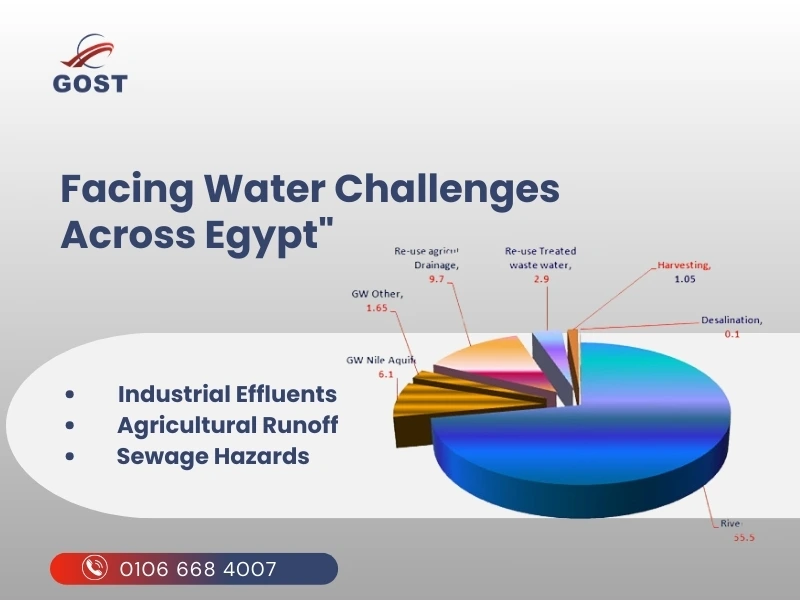
- Main Water Sources: Egypt’s primary freshwater source is the River Nile, supplemented by limited groundwater (deep Nubian aquifers, Nile aquifer, oases) and desalinated seawater (e.g., Red Sea resorts in Hurghada, Sharm El-Sheikh, and emerging destinations like El Gouna). All major cities (Cairo, Alexandria, Giza, Suez) and 95% of the population live along the Nile corridor from Aswan in the south to the Mediterranean coast.
The Nile Delta and Valley supply irrigation water for crops (rice, cotton, vegetables) and urban needs across governorates, including Dakahlia, Kafr El-Sheikh, and Gharbia. For specialized equipment used in monitoring water quality parameters, our best calibration laboratory ensures accurate measurements across all testing instruments. Coastal areas like Alexandria and Matrouh draw from the Mediterranean; Red Sea cities (Hurghada, Sharm El-Sheikh, Safaga, Marsa Alam) use Nile water piped and desalination facilities. Rainfall is negligible, so maintaining quality in these sources through comprehensive Environmental Water Testing is vital for Egypt’s sustainable development. - Quality Challenges: Egypt faces acute water stress and pollution across multiple regions. Industrial zones in Greater Cairo, Suez Canal Economic Zone, and new cities like the New Administrative Capital, growing urban areas, and intensified farming introduce contaminants.
In Greater Cairo (including Giza and Qalyubia governorates) and Suez, dozens of factories (sugar, food, petrochemical, plastic/rubber) discharge wastes. Recent reports estimate over 300 million cubic meters of industrial sewage enter the Nile (Cairo–Aswan) annually, often bypassing required treatment. Untreated municipal sewage and solid waste also flow into drains from cities like Minya, Sohag, and Qena.In the Nile Delta governorates (Beheira, Dakahlia, Kafr El-Sheikh), agricultural runoff carries pesticides, fertilizers, and nutrients (nitrates, phosphates) that cause eutrophication and algal blooms. Saltwater intrusion from the Mediterranean is increasing Delta salinity, while desert groundwater in areas like Siwa Oasis and the New Valley can be high in naturally occurring salts and arsenic.
Coastal tourism in Red Sea governorates adds another concern: marine pollution and swimming pool hygiene (chlorination byproducts, pathogens) need monitoring in resort destinations from Taba to Marsa Alam. In summary, the main pollutants across Egypt’s regions are industrial effluents, sewage, seawater salinity, and agricultural chemicals. This cocktail of metals, organics, and pathogens threatens fish, irrigation qualit,y and drinking-water supplies from the southern borders with Sudan to the northern Mediterranean coast.
Common Contaminants & Parameters
Environmental Water Testing measures a wide range of parameters across Egypt’s diverse water sources:
- Physicochemical: pH, turbidity, electrical conductivity (salinity/hardness), total dissolved solids (TDS), color, and temperature.
- Nutrients & Organics: Biochemical Oxygen Demand (BOD) and Chemical Oxygen Demand (COD) indicate organic pollution (sewage, industrial organics). Nitrate, nitrite, ammonium, and phosphate levels signal agricultural runoff from intensive farming areas in Minya, Fayoum, and throughout the Delta. Toxic organics such as phenols, pesticides (e.g., chlorpyrifos, glyphosate), and petroleum hydrocarbons (BTEX, oils) are also tested, particularly important near Suez Canal shipping lanes and petrochemical facilities.
- Heavy Metals: Lead (Pb), mercury (Hg), arsenic (As), cadmium (Cd), chromium (Cr), and others, which can come from mining operations in the Eastern Desert, industry, or plumbing systems across urban areas. These are strictly regulated due to health risks to populations in densely populated areas like Greater Cairo and Alexandria.
- Microbiological: Total coliform and E. coli bacteria reveal sewage contamination in water sources serving cities from Ismailia to Luxor. Industries requiring specialized NDT service for pipeline integrity monitoring ensure their water systems remain contamination-free. Legionella or Pseudomonas tests may be done for cooling towers or pools in hotels across Red Sea resort destinations. Algae and cyanotoxins (microcystin) may be checked when blooms occur in Nile reservoirs or Delta waterways.
- Emerging Contaminants: Newer concerns include PFAS (“forever chemicals”) from industrial sources in major manufacturing hubs, pharmaceutical residues, microplastics, and endocrine disruptors. Advanced Environmental Water Testing (e.g., LC-MS/MS) may be needed to detect these at trace levels in water bodies serving Egypt’s growing population centers.
Addressing these contaminants is crucial for crop safety, ecosystem health, and public welfare across all Egyptian regions. For example, Environmental Water Testing of irrigation water in the Nile Delta governorates ensures levels of nitrates or pesticides stay within safe limits, preventing crop damage and groundwater pollution in areas supporting millions of farmers. Likewise, testing an industrial discharge near Suez or in the new industrial zones of East Port Said for metals and organics verifies compliance with Egyptian effluent standards. In coastal resorts like Hurghada, Dahab, and the emerging North Coast developments, pool and seawater testing keep tourists safe from pathogens and chemicals.
Environmental Water Regulations in Egypt
Egypt has a detailed regulatory framework governing water quality, overseen mainly by the Ministry of Water Resources & Irrigation (MWRI) and the Egyptian Environmental Affairs Agency (EEAA) (part of the Ministry of Environment). These regulations apply uniformly across all governorates from Aswan and Luxor in Upper Egypt to Alexandria and Matrouh on the Mediterranean coast. Key laws and standards include:
- Law 48/1982 (Nile Protection): This law forbids discharging waste into the Nile and waterways without treatment. Permits are required for any new discharge affecting water quality from the High Dam in Aswan to the Delta outlets near Damietta; violations allow authorities to order cessation or even withdraw operating licenses for facilities across Egyptian industrial centers.
- Law 93/1962 (Wastewater Disposal): Regulates dumping sewage into public sewer networks serving major cities like Cairo, Alexandria, Suez, and Ismailia. Ministerial Decree 44/2000 extended this by setting effluent limits for industries discharging to sewers across all Egyptian governorates. These standards limit BOD, COD, heavy metals, etc.
- Law 4/1994 (Environmental Protection Law): Egypt’s umbrella environmental law applies nationwide from Halayeb and Shalateen in the south to Salloum on the western border. It prohibits various pollution acts (air, water, soil) and authorizes EEAA to set regulations and enforce penalties. Companies requiring reliable oversight can benefit from working with a trusted third-party inspection agency to ensure compliance. It has been updated by Presidential Decree 147/2021 to strengthen enforcement of the Nile protection laws across all regions where Environmental Water Testing is conducted.
- Sector Regulations: Other laws govern specific waters: Law 12/1984 covers irrigation distribution throughout the Nile Valley and Delta; Law 231/1984 (amending Law 213/1984) deals with river hydraulics; Law 280/1960 addresses maritime waters and ports from Alexandria to Safaga and Berenice. The National Water Research Center (NWRC) and EEAA also issue technical guidelines for monitoring and treatment across Egypt’s water bodies.
- Drinking Water Standards: Ministry of Health Decree 458/2007 sets national drinking water quality standards (microbiological and chemical). While aimed at tap water, labs often reference these limits when conducting Environmental Water Testing of surface/groundwater intended for human use in cities from Mansoura to Qena.
Compliance requires permits and regular reporting for facilities across all Egyptian cities and industrial zones. For critical infrastructure like lifting equipment used in water treatment facilities, professional lifting inspection services ensure operational safety and regulatory compliance. EEAA’s inspectors, together with the Nile Water Police, conduct on-site inspections of discharges from the Mediterranean coast to Upper Egypt. Authorized labs (see Section VI) analyze samples.
Penalties for non-compliance are severe: dumping industrial or sewage waste illegally into waterways is a crime punishable by heavy fines and jail time under Egypt’s environmental laws enforced from Alexandria to Aswan. The law firm analysis notes that offenders can face imprisonment and fines under Environmental Law 4/1994. Convictions can also revoke operating licenses, and citizens may sue polluters for damages.
In sum, both preventative and punitive measures exist: industrial and municipal facilities across Egypt from Port Said to Abu Simbel, must meet EEAA/Ministry discharge standards (with regular lab monitoring), and the government actively enforces against violators through comprehensive Environmental Water Testing programs.
For businesses operating anywhere in Egypt, staying up-to-date on permits and testing is critical to avoid penalties. GOST Egypt helps clients navigate this framework by offering accredited testing that aligns with all Egyptian regulations and international standards, ensuring results will be accepted by EEAA, MWRI, or other authorities nationwide.
Key Parameters and Testing Methodologies
Major Water Quality Parameters
Environmental Water Testing covers physical, chemical, and biological categories across Egypt’s diverse water sources. Key parameters include:
- pH and Conductivity: Indicate acidity and salt content (important in coastal waters near Alexandria, Matrouh, and Red Sea cities, and irrigation waters throughout the Delta).
- Turbidity & TSS: Suspended solids measure clarity. High turbidity can shield bacteria and reduce disinfection efficiency in treatment plants serving Greater Cairo and other metropolitan areas.
- Dissolved Oxygen (DO): Critical for aquatic life in the Nile from Aswan Lake to the Mediterranean outlets; measured on-site or in a lab by probes. Low DO in effluent indicates high organic load (linked to high BOD/COD) from municipal or industrial sources.
- Chemical Oxygen Demand (COD) / Biochemical Oxygen Demand (BOD): Lab tests for organic pollutant load (e.g., industrial organics from factories in 6th October City, sewage from urban centers across Egypt).
- Nutrients (Nitrate, Nitrite, Ammonia, Phosphate): Typically analyzed by spectrophotometry or ion chromatography. Elevated levels suggest fertilizer runoff from intensive agriculture in Gharbia and Kafr El-Sheikh or sewage contamination.
- Heavy Metals (Pb, As, Hg, Cd, Cr, etc.): Detected by Atomic Absorption or ICP-MS. These toxic metals are strictly controlled across all Egyptian water bodies — even low ppb levels are significant for public health protection.
- Organic Pollutants: Volatile organics (benzene, toluene, MTBE), semi-volatiles (PCBs), and pesticides/herbicides (e.g., DDT residues, chlorpyrifos) are measured with Gas Chromatography–Mass Spectrometry (GC-MS) or LC-MS, particularly important for Environmental Water Testing near agricultural zones and industrial areas.
- Microbiological Indicators: Total coliforms, fecal coliform/E.coli, and other pathogens are cultured on selective media or detected via PCR. Swimming pools in Red Sea resorts from Hurghada to Taba might require additional tests for Legionella or Pseudomonas.
- Emerging Contaminants: PFAS (“forever chemicals”), pharmaceuticals, and endocrine disruptors require specialized Environmental Water Testing methods (UHPLC-MS/MS). Testing labs can screen these if needed across Egypt’s water systems.
Each parameter helps diagnose specific issues affecting Egypt’s water resources. For example, a spike in nitrate with farm runoff in Dakahlia or Sharqia governorates, or a sudden rise in arsenic near industrial sites in Suez or Ain Sokhna. By monitoring a broad panel through systematic Environmental Water Testing, labs ensure that both regulatory limits and ecosystem health criteria are met across Egypt’s diverse geographic regions.
Sampling and Field Testing
Proper sample collection is the first step in effective Environmental Water Testing across Egypt’s varied terrain. Trained technicians collect representative samples using clean containers, following protocols to avoid contamination, whether sampling from the Nile near Cairo, irrigation canals in Beheira, or coastal waters near Marsa Matrouh. For instance, metal samples may be acid-preserved; nutrients are chilled until analysis at laboratories in major cities.
Field measurements (in-situ) provide immediate data for Environmental Water Testing: portable pH/EC/multimeter probes can log pH, conductivity, temperature, and dissolved oxygen on-site across Egypt from the Red Sea coast to the Western Desert oases. Turbidity meters and colorimeters let inspectors get quick readouts whether working in the Nile Delta, around Lake Nasser, or in coastal areas. These instant results guide decision-making (e.g., whether immediate action is needed) and ensure samples taken to Cairo or Alexandria labs are representative.
Field teams also check parameters like the flow rate of a discharge during Environmental Water Testing operations. For example, when testing an industrial outfall near Suez Canal cities like Ismailia, technicians record effluent flow and take time-weighted composites. Proper chain-of-custody documentation accompanies every sample to GOST’s labs in Egypt’s capital and coastal regions.
Training and QA procedures (calibrating field meters each day) are critical for reliable Environmental Water Testing. GOST’s field testing kits and mobile labs enable rapid analyses (such as field spectrophotometry for nitrate or on-site bacteria testers) to be conducted across Egypt’s governorates, from the Sinai Peninsula to the Qattara Depression, as needed.
Laboratory Analysis
Once samples reach the lab, Environmental Water Testing analysis is done with high-precision instrumentation. GOST’s ISO/IEC 17025:2017 accredited environmental labs in Cairo and Alexandria are equipped with state-of-the-art analyzers serving clients across Egypt:
- Spectrophotometers and auto-titrators for nutrients, hardness, and chemical oxidants.
- ICP-MS/ICP-OES and AAS for trace metals (ppb detection) are crucial for Environmental Water Testing.
- GC-MS/GC-ECD/GC-FID for organic pollutants (solvents, petroleum hydrocarbons, pesticides) affecting water quality from Alexandria’s industrial areas to Aswan’s agricultural regions.
- HPLC for certain organics and nutrients in Environmental Water Testing protocols.
- Automated membrane filtration systems and PCR thermocyclers for microbial testing of samples from across Egypt’s water systems.
Rigorous quality control (blanks, spikes, duplicates) ensures accurate, defensible Environmental Water Testing results for clients from Cairo to Aswan. Because GOST labs follow ISO/IEC 17025 protocols, every step is validated: employees are trained to “perform specific types of testing,” and equipment is regularly calibrated. For facilities requiring precise monitoring measurements, GOST offers specialized temperature calibration egypt services to ensure instrument accuracy. Results include uncertainty estimates and full documentation meeting international standards.
This high level of competence is crucial given Egyptian requirements across all governorates: GOST’s ISO/IEC 17025 certification (coupled with EGAC accreditation) means its Environmental Water Testing data are internationally recognized. For clients from Suez Canal industrial zones to tourism facilities in South Sinai, that means their water quality reports (for a factory in 6th October City, Nile irrigation canal in Minya, or resort pool in Dahab) will be trusted by regulators. In short, GOST’s advanced lab ensures precise Environmental Water Testing science, with every contaminated drop traced and quantified down to trace levels using the latest methods across Egypt’s regions.
Applications of Environmental Water Testing in Egypt
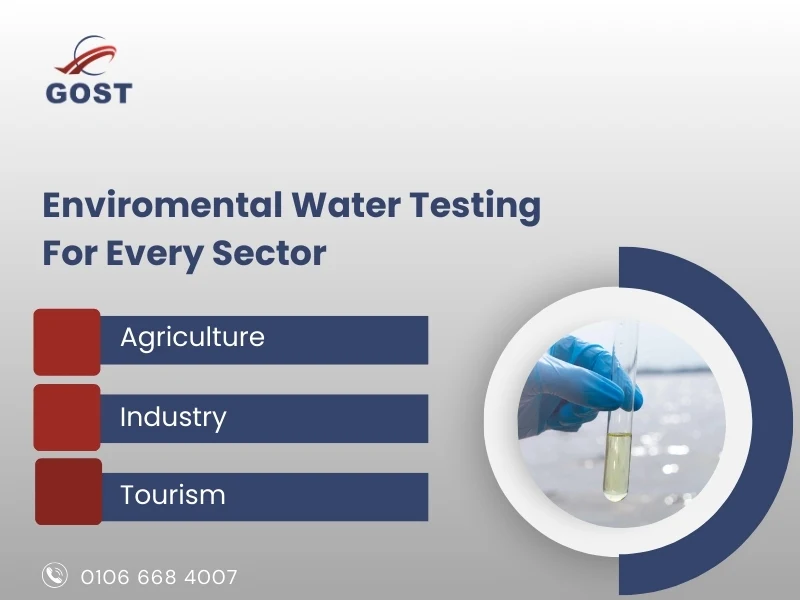
Environmental Water Testing has many real-world applications across Egypt’s economy and diverse geographic regions:
- Agriculture & Irrigation: Farmers in the Nile Delta governorates (Dakahlia, Kafr El-Sheikh, Beheira) and Upper Egypt (Minya, Assiut, Sohag) depend on safe irrigation water. GOST can analyze canal or well water for salinity, nitrates, and heavy metals to optimize crop health through proper Environmental Water Testing. For example, a rice farm in Kafr El-Sheikh may test irrigation samples for pesticides (e.g., organophosphates) and nutrient levels to prevent soil degradation. Irrigation drainage water (return flows) is also tested to inform reuse or discharge decisions across the Delta. In the Western Desert oases (Siwa, Fayoum, Kharga, Dakhla), groundwater Environmental Water Testing ensures salinity and fluoride are within safe ranges for both plants and drinking water supplies.
- Industrial Discharges: Many industries (textile, food & beverage, petrochemical, pharmaceuticals) across Egypt’s industrial cities require effluent permits backed by regular Environmental Water Testing. In Suez, Port Said, Ismailia, or new industrial zones like 6th October City and the New Administrative Capital, GOST tests wastewater from factories for BOD/COD, suspended solids, and specific toxics (e.g., chromium from tanneries, chemical oxygenates) to verify compliance. An oil refinery or power plant near Cairo, Alexandria, or Aswan might need regular Environmental Water Testing analysis of its cooling-water discharge (chlorine, metals) — GOST’s inspectors can draw samples and report to the EEAA from any location across Egypt.
- Municipal Water & Wastewater: Cities and towns from Mersa Matruh to Halayeb use Environmental Water Testing to protect public health. GOST analyzes Nile or canal water used for drinking treatment (checking coliforms, nitrates, fluoride) across major population centers. After treatment, tap and bottled water require microbial and chemical testing per Ministry of Health standards. For wastewater, Environmental Water Testing of a municipal treatment plant’s effluent (e.g., facilities serving Luxor, Aswan, or Alexandria) ensures discharged water meets regulatory limits for reuse or safe release. Swimming pools and cooling towers in hotels across Red Sea destinations (Hurghada, Sharm El-Sheikh, El Gouna, Marsa Alam) are tested for bacteria, chlorine byproducts, and pH to prevent outbreaks.
- Construction & Real Estate: Construction projects (dams, bridges, housing developments) across Egypt, from New Cairo to New Alamein, need Environmental Water Testing for environmental impact assessment. For instance, when developing near Lake Manzala (a polluted delta lagoon) or around Lake Nasser near Aswan, builders test water and sediment for heavy metals and sewage indicators. Concrete and foundation works near coastal areas in Alexandria, Matrouh, or Red Sea governorates require testing for sulfate content in groundwater. GOST also provides Environmental Water Testing for building permit files, civil protection plans, and clean-up of contaminated sites across Egypt’s development zones.
- Public and Private Stakeholders: Authorities (EEAA, Nile Basin Commission) and private entities across all Egyptian governorates alike rely on Environmental Water Testing. NGOs and researchers studying Nile pollution often contract labs like GOST for sample analysis from sources spanning Aswan to Alexandria. Even local farmers in the Delta or dive operators in Dahab and Sharm El-Sheikh can submit water or sediment samples for analysis through GOST’s comprehensive Environmental Water Testing services.
Figure: Irrigated farmland in the Nile Delta. Regular testing of irrigation and drainage water for nutrients, salts, and pollutants helps protect crops, soil, and livelihoods.
In all these scenarios, national coverage across Egypt’s 27 governorates is crucial. GOST’s presence in Cairo and Alexandria — plus mobile teams reaching every Egyptian region from Siwa Oasis to Saint Catherine — ensures samples from the Nile Valley, Delta, Red Sea coast, and Sinai Peninsula can be collected quickly for Environmental Water Testing. Moreover, GOST’s integrated services (testing, inspection, calibration) mean clients get a one-stop solution whether operating in Cairo’s industrial zones, Alexandria’s port areas, or tourism facilities along the entire Red Sea coast. For example, a factory in New Administrative Capital can have GOST inspect its water treatment system, test the output, and calibrate its flow meters.
Water Testing and Accreditation
Benefits of professional Environmental Water Testing: Prompt detection of contamination prevents costly shutdowns across Egypt’s industrial and agricultural sectors. For industries operating from Port Said to Aswan, documented compliance avoids fines. For communities across Egyptian governorates, it means safer irrigation and drinking sources. By highlighting problems early through systematic Environmental Water Testing (e.g., identifying a pesticide hotspot in river water near intensive farming areas in Minya or Fayoum), testing also enables practical solutions: installing treatment, adjusting fertilizer use, or remediating pollution.
Selecting a capable lab for Environmental Water Testing is vital for operations across Egypt. Key factors include:
- Accreditation & Standards: Ensure the lab is EGAC-accredited for ISO/IEC 17025 (like GOST Egypt). This guarantees technical competence and standardized Environmental Water Testing methods. An accredited lab’s results carry legal weight with regulators across all Egyptian governorates.
- Technical Expertise & Equipment: A top Environmental Water Testing lab handles all required tests. For GOST, this includes sophisticated instruments (GC-MS, IC, HPLC, ICP, PCR, etc.) to cover every parameter from heavy metals to bacteria. Look for labs that routinely conduct Environmental Water Testing for trace pollutants and participate in proficiency programs.
- Coverage & Turnaround: A lab with multiple locations (Cairo/Alexandria) and field teams can pick up samples quickly nationwide for Environmental Water Testing. Industries requiring comprehensive quality control benefit from working with the best pre-shipment inspection company to ensure product integrity before export. GOST offers nationwide pickup across all Egyptian cities and fast turnaround, with both field screening and full lab analysis. Quick reporting is crucial for timely decisions affecting operations from Suez Canal facilities to Red Sea resorts.
- Quality Assurance: Leading Environmental Water Testing labs publish QA/QC credentials. GOST’s ISO/IEC 17025 certification means every step (sampling, analysis, reporting) follows strict quality controls. This minimizes errors or delays due to retests for clients across Egypt.
- Experience & Sectors: Choose an Environmental Water Testing lab with sector experience relevant to your needs. GOST has served agriculture across the Nile Delta, industry in Greater Cairo and Suez, municipalities from Alexandria to Luxor, and tourism sectors along Egypt’s coasts, so its reports address sector-specific concerns (for instance, NFSA requirements for bottled water or EEAA limits for effluents).
- Integrated Services: Beyond Environmental Water Testing, a full-service provider (like GOST) can also handle inspection (ensuring treatment systems meet standards) and calibration (verifying instruments on-site) across all Egyptian regions. This integration saves time and ensures consistency.
No comparison table is shown here, but consider these points as your checklist for Environmental Water Testing providers. Ultimately, the lab should act as a partner: explaining results, advising on compliance, and supporting audits. For facilities requiring precise measurement equipment, GOST provides professional electrical calibration services to maintain instrument accuracy across all testing procedures. GOST’s labs in Alexandria and Cairo excel on all these criteria, backed by a national network of inspectors and engineers serving every Egyptian governorate. This makes GOST an ideal partner for any organization prioritizing reliable Environmental Water Testing analysis.
Clean water is non-negotiable for Egypt’s health and economy from the Mediterranean coast to the southern borders. Environmental Water Testing is the first step in managing pollution, ensuring compliance, and protecting communities across all Egyptian regions. By rigorously monitoring the Nile, the Delta’s irrigation canal,s and coastal waters through comprehensive Environmental Water Testing programs, stakeholders can detect problems early and fix them. GOST Egypt’s advanced, ISO/IEC 17025–accredited laboratories and nationwide Environmental Water Testing services empower businesses and local authorities across Egypt’s 27 governorates to do just that.
Whether you need Environmental Water Testing for an industrial effluent, irrigated field water in the Delta, swimming pool in Red Sea resorts, or anything in between, GOST is ready to help across all Egyptian cities and regions. Our experts ensure your samples are handled correctly and analyzed with cutting-edge equipment. We provide fast, reliable Environmental Water Testing results and clear guidance on meeting Egyptian standards.
Take action now: Don’t leave water quality to chance. For critical infrastructure inspection needs, GOST offers specialized temperature mapping services to monitor thermal conditions in water treatment facilities. Contact GOST Egypt’s specialists today to schedule Environmental Water Testing, inspection, or calibration services for your operations anywhere in Egypt. Call our Cairo office at +202-3760-6450 or Alexandria at +203-4228-204 for a consultation. Our team will help you protect your people, your business, and Egypt’s water resources through professional Environmental Water Testing solutions.
FAQs on Environmental Water Testing Services
What is the difference between drinking water testing and wastewater testing?
Drinking water testing focuses on potability — it checks for contaminants in tap or bottled water against health-based standards (e.g., microbial counts, lead, nitrate) to ensure safety for consumers across Egyptian cities from Alexandria to Luxor. Environmental Water Testing, by contrast, analyzes natural or waste waters (rivers, canals, groundwater, effluent) to assess ecosystem and regulatory compliance across Egypt’s diverse regions.
WasteWater Testing measures a broader range of parameters (such as BOD/COD, pesticides, heavy metals, and salinity) that matter for agriculture and industry. In short, drinking-water tests protect public health in distribution systems, while Environmental Water Testing monitors the health of water bodies and discharges across Egypt’s governorates.
How often should environmental water be tested?
There is no one-size-fits-all schedule for Environmental Water Testing; testing frequency depends on risk, regulations, and usage across different Egyptian regions. High-risk discharges (industrial effluents from factories in Greater Cairo, Suez, or Alexandria) may require monthly or quarterly Environmental Water Testing per permit conditions. Public water bodies might be sampled seasonally or after rain events. Farms across the Nile Delta and Valley might need Environmental Water Testing of irrigation water each planting season or annually.
Wastewater plants serving cities from Port Said to Aswan often sample weekly or daily as required. As a rule, do more frequent Environmental Water Testing for critical parameters (e.g., bacteria in recreational water along Egypt’s coasts, heavy metals in industrial outfalls). GOST can work with you to design a monitoring plan that meets Egyptian laws and your project’s needs, balancing cost with safety across any Egyptian location.
What are the penalties for non-compliance with Egyptian water regulations?
Egypt enforces strict penalties for violations of Environmental Water Testing and discharge requirements. Under environmental law (e.g., Law 4/1994 and Law 48/1982), illegal dumping of industrial or sewage waste into the Nile or waterways is a crime punishable by heavy fines and jail time across all Egyptian governorates.
Courts may also revoke business licenses or order shutdowns for facilities from Alexandria to Aswan. In recent reforms, penalties have increased, and communities can seek compensation. In practice, non-compliant companies across Egypt risk legal action by the EEAA and the Water Police. Ensuring routine Environmental Water Testing and compliance protects you from these severe fines regardless of your location in Egypt.
Can individuals get local environmental water sources tested?
Yes, both organizations and private citizens across Egypt can submit samples for Environmental Water Testing to accredited labs. GOST provides testing for any entity: farmers in the Delta, NGOs studying Nile pollution, or households in Cairo, Alexandria, or any Egyptian city. For example, residents can have well or pond water analyzed for contamination through Environmental Water Testing.
If you’re concerned about a river, canal, or groundwater quality anywhere in Egypt from Aswan to Matrouh, simply contact GOST. We will collect or accept your samples (e.g., Nile water, irrigation runoff) and provide a full Environmental Water Testing report. Our services are open to any customer across Egypt and are conducted under EGAC-accreditation (ISO 17025), ensuring results are credible for any official need.
What are emerging contaminants in environmental water?
Emerging contaminants are pollutants that have recently become a concern in Environmental Water Testing protocols. In Egypt, these include PFAS (industrial “forever chemicals”), pharmaceuticals and personal care products (antibiotics, hormones), and microplastics affecting water bodies from the Mediterranean to the Red Sea. New pesticide formulations (neonicotinoids) and algal toxins (from cyanobacterial blooms) are also monitored through advanced Environmental Water Testing.
These often occur at trace levels and require specialized Environmental Water Testing methods (e.g. LC-MS/MS). While not yet all regulated, monitoring these helps catch long-term threats early across Egypt’s water systems. GOST’s advanced lab can detect many emerging compounds through comprehensive Environmental Water Testing to help clients future-proof their compliance and protect health nationwide.