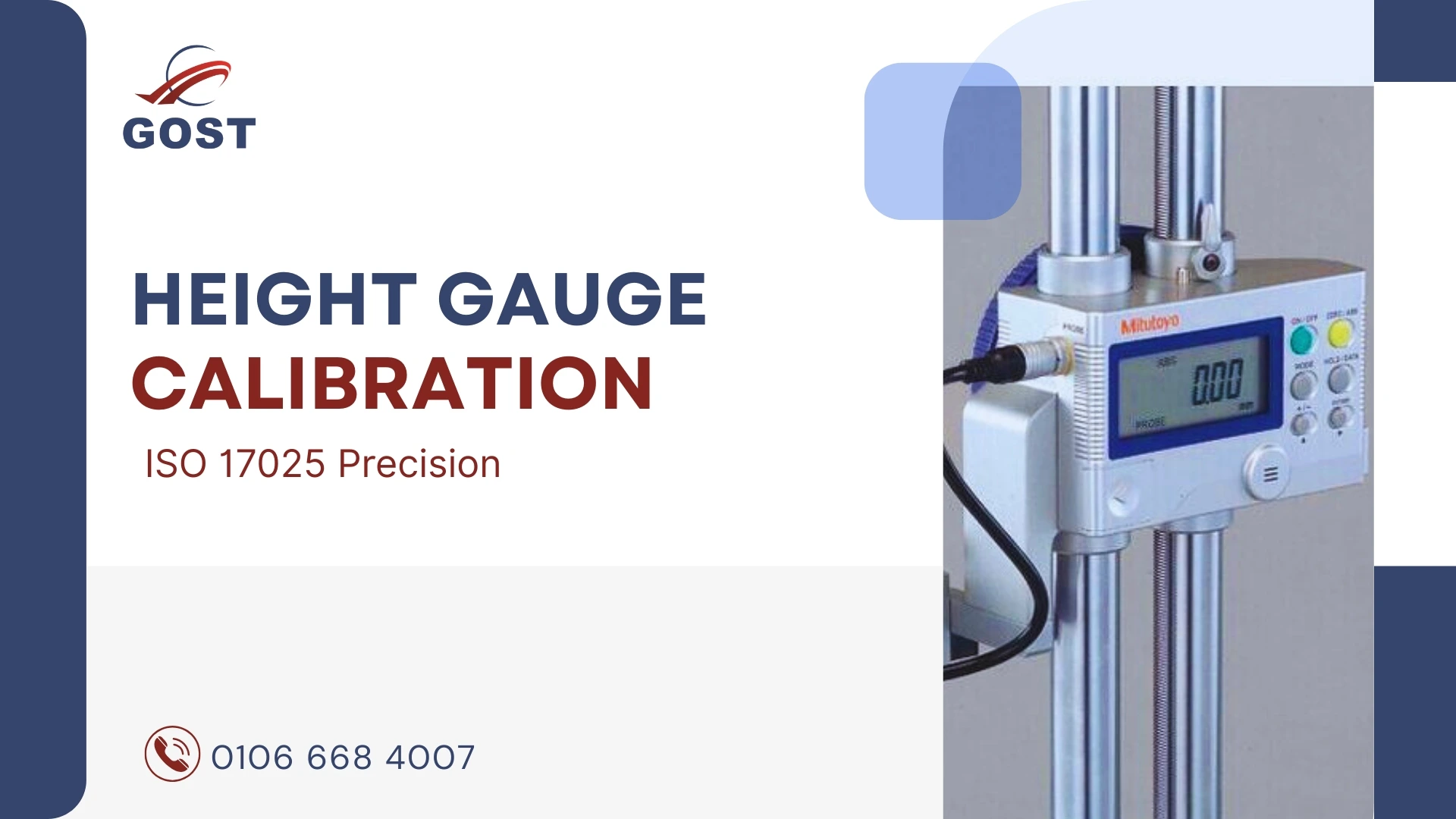
In industries from automotive to aerospace in Egypt, every millimeter counts. A height gauge — a tool for measuring vertical dimensions — must be precisely calibrated to keep production smooth and compliant. Even a slight drift can cause assembly errors, scrap, and costly rework. Regular height gauge calibration and testing services ensures measurement accuracy, operational efficiency, and regulatory compliance. As an ISO/IEC 17025-accredited laboratory (EGAC-recognized in Egypt), GOST provides fast, traceable calibration services that give manufacturers confidence in their measurements.
Height gauges are used in many sectors — from manufacturing and heavy industry to oil & gas, automotive, aerospace, pharmaceuticals, construction, agriculture, and logistics — anywhere precise height measurements are critical. Inaccurate gauges can lead to defective parts, regulatory penalties, and safety risks. By calibrating height gauges to national and international standards, companies prevent defects and ensure quality control.
What is Height Gauge Calibration?
Height gauge calibration is the process of verifying and adjusting a gauge’s accuracy against known standards. In practice, a technician uses NIST-traceable gauge blocks or master reference standards and a flat surface plate to test the height gauge at multiple points. For example, ISO/IEC 17025-accredited labs (like GOST’s EGAC-certified lab) take readings at five or more test points across the gauge’s range to ensure it’s within tolerance. This generates a detailed calibration report and a traceable Height Gauge Calibration certificate. The certificate documents the instrument’s as-found and as-left measurements, environmental conditions, and measurement uncertainty — all critical for quality audits and ISO 9001/17025 compliance.
“Calibrating height gauges according to ISO 17025 (NIST-traceable) with multiple test points ensures your equipment is within tolerance across its full scale”.
In simple terms, calibration confirms that your height gauge reads true. It sets the “zero” and scale, checking vertical measurements against certified lengths. After Height Gauge Calibration, your height gauge comes with an official report and certificate. These traceable certificates show regulators and customers that your instruments meet international accuracy standards.
Why Height Gauge Calibration is Important
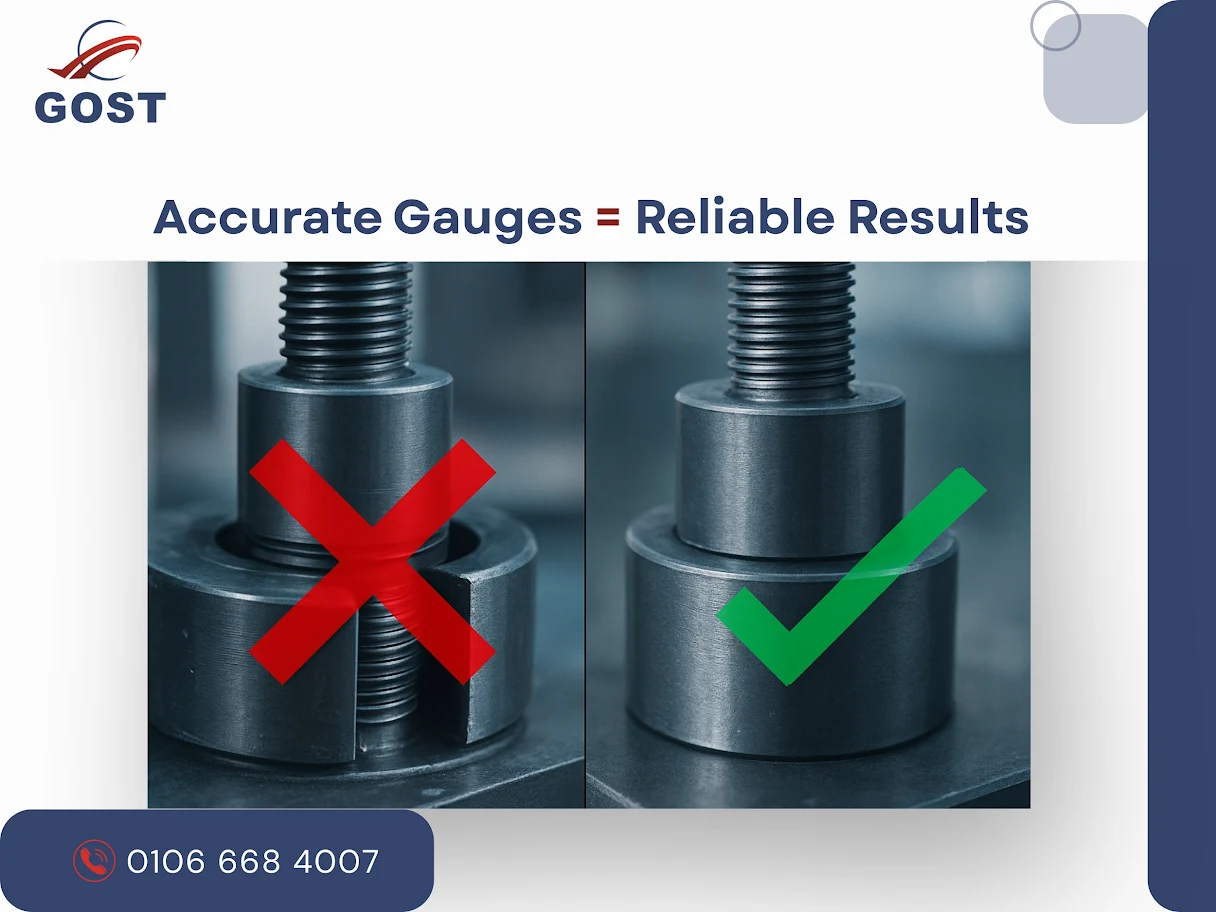
- Accuracy & Quality: Accurate height gauges prevent misaligned parts and defective products. Even minor errors can cascade into major failures on the production line.
- Compliance & Audits: Many quality standards and industry regulations (ISO 9001, ISO 17025, ASTM, etc.) require regular calibration. Calibrated gauges — with valid certificates — ensure you pass inspections and avoid penalties.
- Safety & Efficiency: In sectors like oil & gas or aerospace, measurement errors can pose safety hazards. Proper calibration reduces waste, scrap rates, and rework, saving time and money. (For instance, rigorous calibration can cut defect rates by double digits in some factories.)
- Peace of Mind: You know your gauges are reliable. As one metrology expert puts it, “ISO 17025-accredited Height Gauge Calibration provides ultimate confidence in quality and accuracy”.
A height gauge that drifts out of spec can undermine an entire quality control process. Industries worldwide rely on calibrated dimensional tools to maintain standards. By keeping your height gauges certified, you ensure that every part truly meets design specs.
How Height Gauge Calibration Works
- Preparation: The height gauge is cleaned and inspected. Height Gauge Calibration may be performed in a temperature-controlled lab to minimize environmental effects (consistent with ISO/IEC 17025 requirements).
- Reference Standards: Technicians use high-precision gauge blocks and a granite surface plate (master standards) with known dimensions. These are NIST-traceable for ultimate accuracy.
- Measurement Points: Using the gauge, technicians record readings at multiple heights (typically five or more evenly spaced points). This checks the gauge across its full range.
- Adjustment: If the readings deviate beyond tolerance, the gauge is adjusted (if possible) or documented “as found” and “as left”. Modern height gauges often allow fine adjustment of the scriber position.
- Uncertainty Analysis: Each measurement includes a calculated uncertainty. This accounts for lab conditions, equipment resolution, and repeatability.
- Calibration Report: The lab issues a detailed Height Gauge Calibration certificate. It lists the test points, observed vs. true values, uncertainty, and compliance to tolerance. These certificates are important for audit trails and ISO compliance.
For example, Cross Precision Measurement notes that their ISO 17025 lab uses NIST-traceable blocks and requires technicians to test at least five points on a height gauge to “ensure your equipment is within tolerance throughout the full scale”. This thorough process is what sets accredited labs apart: you get reliable, repeatable, and traceable calibration services.
Calibration Frequency: How Often to Calibrate Height Gauges
How often you should calibrate a height gauge depends on usage and requirements:
- Usage Intensity: Gauges in heavy daily use (e.g., busy machine shops) should be calibrated more frequently (often every 6 months). Light-use gauges may be on a 12-month or annual schedule.
- Industry Requirements: Some industries mandate schedules (e.g., annual calibration for aerospace tools). Check any sector-specific standards or customer requirements.
- Environment & Handling: Abrasive or dirty environments and rough handling (dropping the gauge) can cause faster drift. In such cases, shorten the calibration interval.
- Quality Policies: Many ISO 9001/17025-certified companies define calibration intervals in their quality manual, often based on historical drift and risk.
In practice, most precision shops in Egypt and beyond follow a 6–12 month calibration cycle for height gauges. Some critical gauges (high tolerance tasks) may even undergo validation by an operator before each major use.
Quick Tip: Always mark calibrated gauges with a sticker or tag showing the next due date. This avoids guesswork and ensures no instrument goes out of service past its expiration.
On-Site vs Laboratory Calibration

You have two main Height Gauge Calibration options: Laboratory (off-site) or On-Site (field).
| Feature | Laboratory Calibration | On-Site Calibration |
|---|---|---|
| Environment | Controlled lab (stable temperature/humidity) | Your shop floor or facility (varied conditions) |
| Equipment | Full range of high-precision masters and equipment | Portable standards (gage blocks) and tools |
| Accuracy & Scope | Highest accuracy; can calibrate all gauge models | Slightly less controlled; ideal for routine checks |
| Turnaround Time | Generally 2–7 days (shipping to lab) | Minutes to hours (service comes to you) |
| Downtime | Device is unavailable until return from lab | Minimal downtime — equipment stays on site |
| Cost | Typically more cost-effective for many instruments | Additional travel/labour cost, but convenient |
| Best For | Thorough, full-scale certification (e.g. annual) | Quick checks, meeting urgent deadlines, large inventories |
GOST offers both options. For critical instruments or to meet ISO 17025 audit requirements, lab calibration is ideal. Our Alexandria and Cairo labs maintain tight environmental controls and advanced equipment. If keeping machines running is paramount, GOST’s on-site calibration team will come to your facility — even across Egypt and MENA — to minimize disruption.
Whichever method you choose, GOST maintains ISO 17025 standards. We use NIST-traceable references in-lab and high-grade portable standards on-site, ensuring that whether you calibrate in our lab or yours, you get the same traceable calibration certificate.
Calibration Standards and Accreditation
Choosing an accredited lab is crucial. GOST Egypt is EGAC-accredited (by the Egyptian Accreditation Council) to ISO/IEC 17025:2017. This means our processes are regularly audited for competence and impartiality. Being accredited ensures internationally recognized results.
Our calibration procedures follow ASTM and ISO guidelines. We emphasize NIST traceability: every length standard we use is traceable to national metrology institutes. This guarantees your measurements align with global benchmarks.
Why ISO/IEC 17025 Matters: An ISO 17025 lab is independently verified to produce accurate and consistent calibration data. As Fox Valley Metrology notes, “ISO/IEC 17025 accredited calibration provides the ultimate confidence in quality and accuracy”. In other words, your certified results are trusted worldwide.
After Height Gauge Calibration, you receive a certified calibration report. It includes instrument ID, calibration date, due date, and measurement results with uncertainty. These documents are required by quality managers and auditors to prove compliance. In fact, many regulators in Egypt and across Africa insist on such traceable certificates for critical measurements.
Industries & Applications in Egypt
Height gauge calibration isn’t just for metal shops — it’s essential across Egypt’s economy:
- Manufacturing & Heavy Industry: Tool rooms, foundries, and factories rely on height gauges for part inspection and machine setup. Regular calibration avoids production bottlenecks.
- Automotive & Aerospace: Vehicle and aircraft parts require extremely tight tolerances. Calibrated gauges ensure safety and performance in engines, chassis, and components.
- Oil & Gas: Refineries and drilling companies use height gauges in equipment maintenance and component fabrication. Proper calibration prevents leaks and failures in critical systems. For comprehensive oil and gas NDT services, companies rely on accredited testing laboratories to ensure equipment integrity.
- Pharmaceuticals & Healthcare: Lab equipment (like stadiometers or bio-processing tools) depends on vertical measurements. Accredited calibration supports sterility and regulatory audits.
- Construction & Infrastructure: Surveying instruments and tooling jigs for concrete forms need calibration to build structures accurately.
- Agriculture & Food Production: Weighing and measuring devices (e.g., seed planters, filling machines) must be precise to ensure quality and regulatory compliance.
- Logistics & Supply Chain: Pallet jacks, storage racks, and packaging systems often use height measurements for inventory; accuracy can improve efficiency and safety.
By serving these key sectors, GOST Egypt ensures that precision measurement empowers growth. We understand industry-specific challenges and offer dimensional calibration services for all relevant gauges, including height gauges, calipers, micrometers, and more. Our best calibration laboratory provides comprehensive testing solutions for diverse industrial needs.
Why Choose GOST Egypt for Calibration?
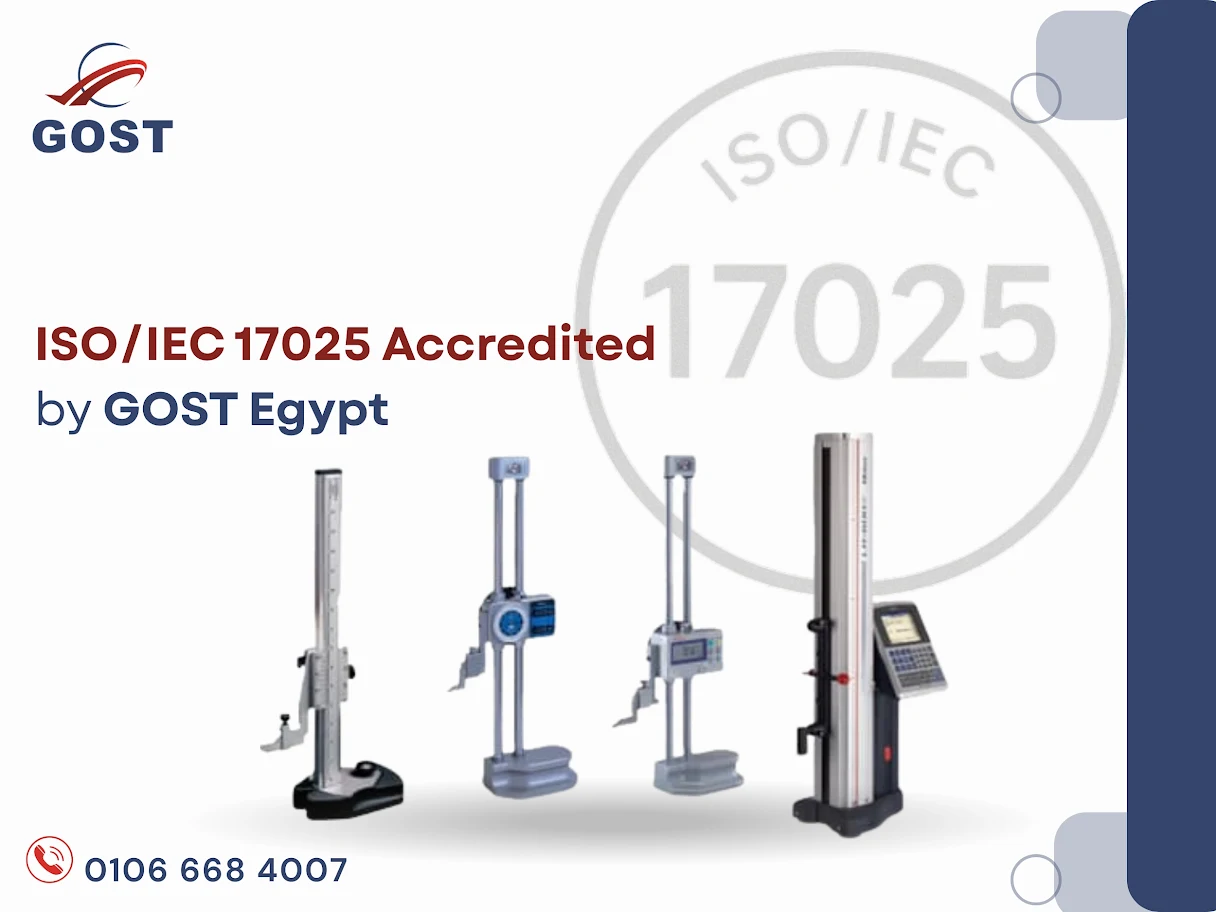
Choosing the right calibration partner is vital. Here’s why GOST (General Organization for Surveillance & Testing) stands out:
- EGAC & ISO 17025 Accreditation: As an accredited lab, GOST guarantees internationally accepted results. Clients know our certificates are valid for audits anywhere.
- Industry Expertise: With decades of experience across automotive, aerospace, oil & gas, pharma, agriculture, and manufacturing, GOST’s engineers understand each sector’s precision needs.
- Comprehensive Services: We calibrate all types of precision instruments — height gauges, calipers, micrometers, pressure gauges, and more. Plus, we offer both lab-based and on-site calibration to suit your needs. Our electrical calibration services complement our dimensional capabilities for complete measurement solutions.
- Fast Turnaround: Our labs in Alexandria and Cairo provide quick service (often 3–5 days for complete reports). On-site teams can service multiple gauges per visit to minimize downtime.
- Traceability & Reporting: Every Height Gauge Calibration comes with a full report detailing measurements and uncertainty. These traceable calibration certificates show compliance to ISO standards.
- Competitive Pricing & Support: We strive to offer value: high-quality service at reasonable rates. GOST’s customer team is always available for quotes, technical advice, or emergency calibration needs.
Client Confidence: When accuracy matters, our clients trust GOST. We adhere to best practices (NIST traceability, multiple-point testing, environmental control) to deliver “reliable, repeatable, and traceable calibration services”. This level of precision helps factories reduce defects and pass stringent audits.
For specialized equipment, GOST also provides torque wrench calibration near me services to ensure proper fastener tension in critical applications. As a leading third party inspection agency, we understand the importance of accurate measurements across all industrial sectors.
Calibration Checklist
Before scheduling a calibration, consider:
- Identify Instruments: List all height gauges (digital, dial, vernier) and note their ID numbers.
- Define Tolerances: Know the accuracy requirements or ISO class of each gauge.
- Check Historical Data: Review past calibration reports to spot any drift trends.
- Schedule Service: Decide between on-site or lab service. On-site is ideal for critical production schedules; lab service is best for comprehensive certification.
- Prepare Purchase Order: Calibration is an investment in quality. Budget for regular calibration to avoid unscheduled downtime.
| Lab Calibration (GOST) | On-Site Calibration (GOST) |
|---|---|
| Controlled environment ensures maximum accuracy. | Convenient field service with portable NIST-traceable equipment. |
| Full support for all gauge sizes and models. | Ideal for large or heavy gauges that are hard to move. |
| Detailed reports with uncertainty analysis. | Immediate verification of as-found conditions. |
| May require instrument shipping/shutdown. | Very little downtime; service comes to your facility. |
FAQ: Height Gauge Calibration
What is ISO 17025 calibration?
ISO/IEC 17025:2017 is the international standard for calibration labs. A lab accredited to ISO 17025 (like GOST Egypt) is independently audited and proven competent. Their calibration results (and certificates) are globally recognized.
Why is height gauge calibration important?
Calibrated height gauges ensure accurate vertical measurements. Inaccuracies can cause misaligned parts, scrap, or safety issues. Regular calibration maintains product quality and compliance.
How often should height gauges be calibrated?
Typically every 6–12 months, depending on use. High-use or critical gauges often go for calibration twice a year. Your industry standards or quality policy may specify the interval.
Where can I find an accredited calibration lab in Egypt?
GOST Egypt is an EGAC-accredited laboratory located in Alexandria (and with an office in Cairo). We calibrate to ISO/IEC 17025 standards and can serve clients throughout Egypt and MENA.
What are the benefits of ISO 17025 accreditation?
It means the lab follows stringent procedures and quality management, ensuring accurate, traceable results. Accreditation gives assurance of competence, impartiality, and consistency.
How to ensure measurement accuracy in manufacturing?
Use calibrated tools, maintain regular calibration schedules, and implement a quality system (ISO 9001/17025). Training staff on proper use and handling of instruments also helps maintain accuracy. For specialized applications, consider temperature calibration egypt services to ensure thermal measurement accuracy.
What are the requirements for calibration audits?
Auditors look for valid calibration certificates (with traceability), evidence of ISO/IEC 17025 accreditation, and documented calibration schedules. Keep all certificates on file to demonstrate compliance.
Ready to Calibrate? Contact GOST Today!
Don’t leave measurements to chance. General Organization For Surveillance & Testing (GOST) is Egypt’s trusted calibration partner. Our experts will ensure your height gauges are fully certified and optimized for performance. Call GOST Calibration Services now or request a quote to schedule your calibration. Let us help you maintain precision, reduce waste, and keep your operations running smoothly — because precision is our sustainable asset.
As a comprehensive service provider, GOST also offers balance calibration services and pre shipment inspection to ensure product quality from manufacturing through delivery.
General Organization For Surveillance & Testing (GOST) — Your ISO 17025-certified calibration laboratory in Egypt.